

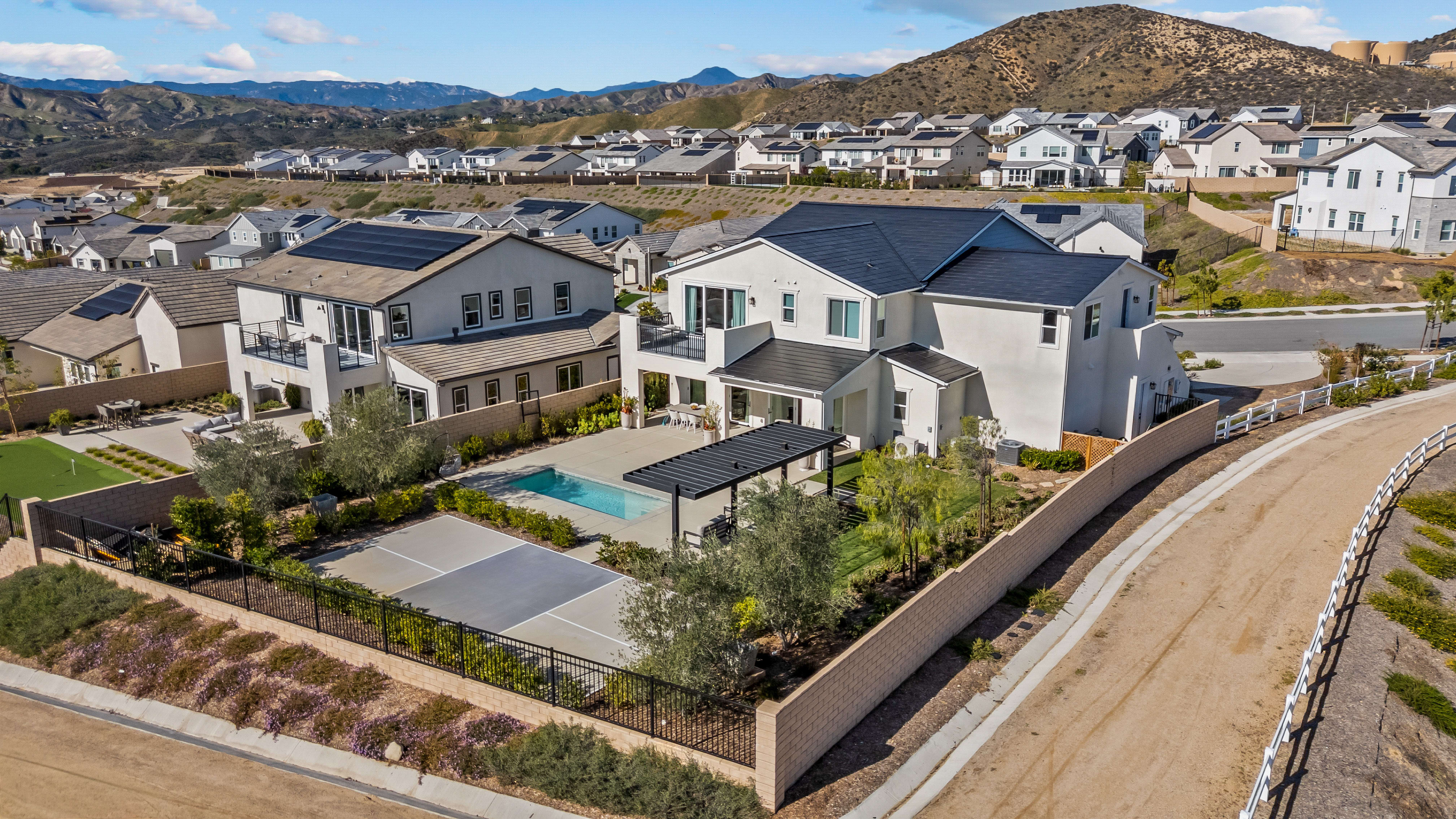

Santa Clarita Housing Market Mid-2026: What Buyers and Sellers Need to Know Now
The Santa Clarita Valley real estate market in mid-2026 is doing something it has not done in years: it is giving buyers room to breathe. That does not mean prices have collapsed or that sellers are at a disadvantage. It means the market has shifted toward balance — and in a balanced market, strategy matters more than speed.
Here is what the numbers show, what they mean for your situation, and how to move forward with confidence.
Where Santa Clarita Home Prices Stand Right Now
Median Sale Price and Year-over-Year Changes
Depending on the data source and time period, median sale prices in the Santa Clarita Valley currently range from the high $700s to the mid-$800s. Redfin data from late 2025 showed a median near $778,000, while Houzeo tracked a median closer to $855,000 in more recent months. The variation reflects different property mixes and reporting windows. What both sources agree on: prices are essentially flat year-over-year, with changes of less than 1% in either direction.
That is a meaningful contrast to the runaway appreciation of 2021 and 2022. Values have largely held, but the frenzied bidding wars have cooled. Sellers who priced aggressively in prior years are now adjusting expectations, and buyers are no longer forced to waive inspections just to compete.
One number worth noting: SCV median prices remain meaningfully below the broader Los Angeles Metro average, which has hovered around $943,000. For buyers priced out of the Westside or the San Fernando Valley, Santa Clarita continues to offer relative value with a lot more square footage for the dollar.
How Valencia, Saugus, and Canyon Country Compare
Not every SCV submarket is moving the same way. Canyon Country has seen slightly softer pricing, with Redfin reporting a recent median around $755,000 — down roughly 5% year-over-year. Valencia, particularly the master-planned communities in the northern part of the valley, tends to hold premium pricing due to walkable amenities, newer construction, and strong school ratings.
Stevenson Ranch and Sand Canyon remain desirable for buyers seeking more privacy and larger lot sizes, and those communities have seen less price softening than some of the higher-density corridors. Castaic, farther north along the I-5 corridor, offers some of the most accessible entry points in the valley, though buyers there should factor in commute time to employment centers.
The takeaway: zip code and neighborhood matter. A market-level statistic tells only part of the story — your specific block, your price range, and your property type will each behave differently.
Inventory and Days on Market — What the Numbers Tell Us
More Choices for Buyers, More Competition Among Sellers
Homes in Santa Clarita are taking longer to sell than they did a year ago. January 2026 data showed average days on market at 62 days, up from 53 the prior year. Recent Redfin data puts the figure around 67–69 days, and some sources tracking December 2025 activity showed the number as high as 53 days with a 28% year-over-year increase.
Regardless of the precise figure, the directional trend is clear: homes are sitting longer. That is not a crisis — it is a correction toward normal. Before 2020, a 60-to-90-day sales cycle was entirely typical in the SCV.
Active listings have hovered around 310–629 homes depending on the reporting period, reflecting roughly 4.3 months of inventory as of early 2026. That places the market in neutral territory. Under three months of supply historically favors sellers; above six months favors buyers. At 4.3 months, neither side holds a dominant hand.
For buyers, this means you can actually schedule a second showing, get an inspection, and negotiate closing costs without losing the home overnight. For sellers, it means presentation, condition, and pricing strategy are no longer optional — they are the difference between a smooth sale and a price reduction.
Mortgage Rates and What They Mean for Your Budget
The Lock-In Effect: Why Fewer Sellers Are Moving
As of the week of June 4, 2026, the 30-year fixed mortgage rate averaged 6.48% nationally according to Freddie Mac — down slightly from 6.53% the prior week, and meaningfully lower than the 6.85% average recorded a year ago. California rates are tracking closely to the national average, with Zillow showing 6.5% for a 30-year fixed in the state as of June 8.
These rates are not low by the standards of the 2010s, but they are improving. The question for many long-time SCV homeowners is not whether rates are good in an absolute sense — it is whether trading a sub-3% or sub-4% rate they locked in during 2020 or 2021 makes financial sense today.
For most people holding those rates, it does not pencil out unless life demands a move. A homeowner with a $600,000 balance at 3.25% pays roughly $2,600 per month in principal and interest. Refinancing or selling and repurchasing at 6.5% on a comparable loan pushes that payment closer to $3,800. That gap — sometimes called the rate lock-in effect — is one reason inventory remains constrained despite prices softening at the margins. Many would-be sellers are simply staying put.
How to Think About Affordability at 6.5%
At 6.5%, a $790,000 purchase with 20% down carries a monthly principal and interest payment of approximately $4,000. That is a meaningful number, and it is honest to say affordability is stretched in the SCV for first-time buyers without significant equity or family support.
The more useful frame, however, is not "are rates high?" but rather "what does waiting cost?" If you are renting and rates drift down to the high 5s over the next 12–18 months, you may save on the mortgage — but you will likely have paid more in rent, potentially bought into a more competitive market, and missed any equity accumulation in the meantime. Rates experts broadly expect the 30-year fixed to remain in the low-to-mid 6% range through the rest of 2026, with some downward drift possible if inflation continues cooling.
The better question is not "should I wait for lower rates?" but "can I afford this home at today's rate, and does buying now serve my life?"
Is Now a Good Time to Buy or Sell in Santa Clarita?
Advice for Buyers
If you have been waiting for the market to "crash," that signal has not come — and the fundamentals that support SCV values (job proximity to LA, quality schools, master-planned communities, relative affordability within LA County) have not changed.
What has changed is your negotiating position. You now have time to be thoughtful. You can negotiate inspection contingencies, request seller credits toward closing costs or rate buydowns, and make offers without waiving your protections. In 2021, those options largely did not exist.
If you are a first-time buyer, the conversation to have right now is about total monthly cost — not just the purchase price. Rate buydowns, adjustable-rate mortgages for buyers who expect to move in five to seven years, and down payment assistance programs through CalHFA are all tools worth exploring with a lender before you start your search.
Advice for Sellers
The era of putting a home on the market on a Thursday, collecting 14 offers by Monday, and closing $80,000 over list price has passed — at least for now. That does not mean this is a bad time to sell. It means preparation and pricing are doing the work that a frenzied market used to do for you.
Homes that are priced accurately from day one, staged well, and marketed with strong photography and digital reach are still moving efficiently. Overpriced homes are sitting, accumulating days on market, and often selling for less than they would have if priced correctly at launch.
If you are a long-time SCV homeowner thinking about your next chapter (downsizing, relocating, accessing your equity) the conversation worth having is about net proceeds and timing, not about hitting a perfect market peak. That peak has come and gone for this cycle. What remains is a market where serious sellers can still do very well.
Working With a Local Expert Makes the Difference
State-level forecasts and national headlines give you the broad strokes, but they do not tell you what 123 Vista Ridge Drive is worth today, or whether the new listing on Copper Hill Road is priced to move or priced to sit.
That is where local expertise (and specifically, deep roots in the Santa Clarita Valley) translates directly into better decisions. Knowing which neighborhoods are absorbing inventory faster, which builder communities have motivated sellers, and how to position a listing against active competition is the work of an advisor who lives and breathes this market every day.
The Kathy Watterson Team has been serving SCV buyers and sellers since 1989. That perspective, across multiple cycles, through rising markets and correcting ones, is exactly what a mid-2026 market rewards.
Every market has a right move — it just depends on your situation. If you are wondering whether this is your moment to buy, sell, or simply get a clearer picture of what your home is worth, I would be glad to walk you through it. Reach out anytime.
Kathy Watterson | RE/MAX of Santa Clarita 📞 661-510-0321 | kathy@kathywatterson.com | @kathywattersonteam
Sources: Redfin, Houzeo, Steadily, Amy Warner Homes Market Report (January 2026), Freddie Mac Primary Mortgage Market Survey (June 4, 2026), Zillow Mortgage Rates (June 8, 2026), Bankrate (June 8, 2026)